Air Curtains vs Strip Curtains for Busy Warehouse Forklift Traffic
Compare air curtains and PVC strips for forklift doors by visibility, repeated contact, cleaning, replacement needs, wind and building-pressure limits.
For a warehouse door with frequent forklift traffic, compare air curtains and PVC strip curtains by visibility, repeated contact, maintenance and the separation required at the opening. Neither option can be selected from door width alone; wind, building pressure, open time and the vehicle route also matter.
PVC strip curtains and air curtains are not the same kind of barrier. A strip curtain is a physical layer that people and vehicles push through. An air curtain creates an active stream of air across the opening while the path stays visually and physically open. For MIWIND buyers, the right comparison is not "which product is better in every warehouse." It is "which layer fits this doorway, this traffic pattern, and this operating problem."
This article focuses on forklift-heavy warehouse openings. For a broader loading-bay workflow guide, start with Warehouse Dock Door Air Curtains. For a complete dock system comparison, see Loading Dock Energy Loss Solutions Compared.
Why Forklift Traffic Changes the Choice
A quiet pedestrian doorway can tolerate a simple barrier more easily than a warehouse dock. Forklift traffic changes the decision because the opening is not just a leak in the building. It is part of the production path.
Busy warehouse doors often have:
- Repeated forklift passes in both directions.
- Pallets blocking a direct line of sight.
- Mixed vehicle and pedestrian movement near the threshold.
- Drivers carrying tall loads that reduce visibility.
- Doors held open during receiving or dispatch.
- Dust, insects, wind, or temperature complaints near the opening.
- Damaged, cloudy, or missing PVC strips from repeated contact.
A warehouse doorway should be reviewed as a traffic and airflow point, not as a normal entrance. The same opening has to support safety, visibility, forklift movement, temperature separation, dust control, insect reduction, and practical daily operation.
The buyer should also keep expectations realistic. Neither a strip curtain nor an air curtain can solve every dock problem alone. Door pressure, crosswind, damaged seals, open opposite doors, truck movement, and operator behavior can all change performance.
Strip Curtains: Strengths and Tradeoffs
PVC strip curtains are common because they are simple. They create a visible physical barrier, can be added to many openings, and may reduce air movement when traffic is moderate. In low-speed or low-visibility-risk areas, they may still be useful.
Their weak point is repeated contact. Forklifts and pallets push through the strips every cycle. Over time, strips can become scratched, curled, dirty, missing, or stiff in cold conditions. If staff lift or tie them aside to improve access, the barrier may no longer perform as expected.
In forklift-heavy areas, the tradeoffs usually fall into five groups:
| Strip-curtain issue | Why it matters in warehouses |
|---|---|
| Visibility | Scratched or cloudy strips can make oncoming traffic harder to see. |
| Contact | Loads, forks, carts, and people touch the strips during each pass. |
| Wear | Strips may need replacement when they tear, discolor, or deform. |
| Cleaning | Dirty strips can create extra housekeeping work. |
| Access | Drivers may slow down, swerve, or avoid the barrier if it feels inconvenient. |
Visibility, cleaning, traffic, and maintenance are the real reasons buyers compare air curtains with PVC strips. The RFQ should therefore explain what the current strips are doing poorly and what the facility wants the replacement layer to improve.
Air Curtains: Strengths and Limits
An air curtain keeps the opening physically clear. Instead of asking a forklift to push through hanging strips, the unit projects air across the doorway. That can make the route easier to use when traffic is frequent and the opening needs to stay open during work.
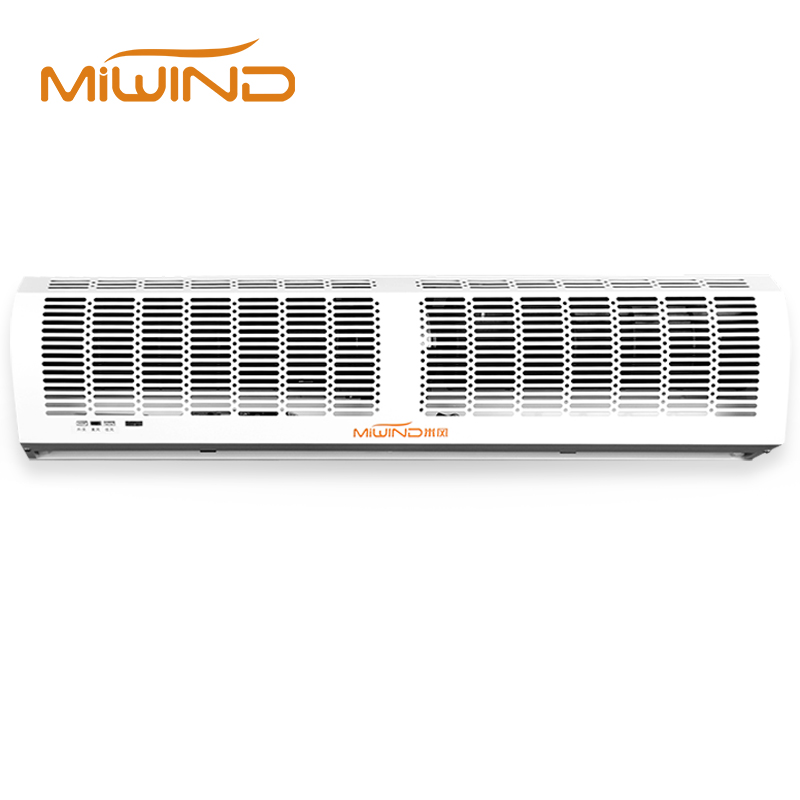
The MIWIND Air Curtain Series can be reviewed as an active airflow layer for warehouse openings where the buyer wants open access and less outdoor air intrusion. For warehouse, factory, and large industrial-door context, the Industrial Series solution is the better application page.
Air curtains are often considered when the facility wants to reduce:
- Outdoor air exchange at an open industrial door.
- Temperature movement near a dock or workshop door.
- Flying insect entry during receiving and dispatch.
- Dust and loose debris moving through the opening.
- Contact and cleaning issues caused by worn strips.
- Delay or inconvenience when forklifts pass through a physical barrier.
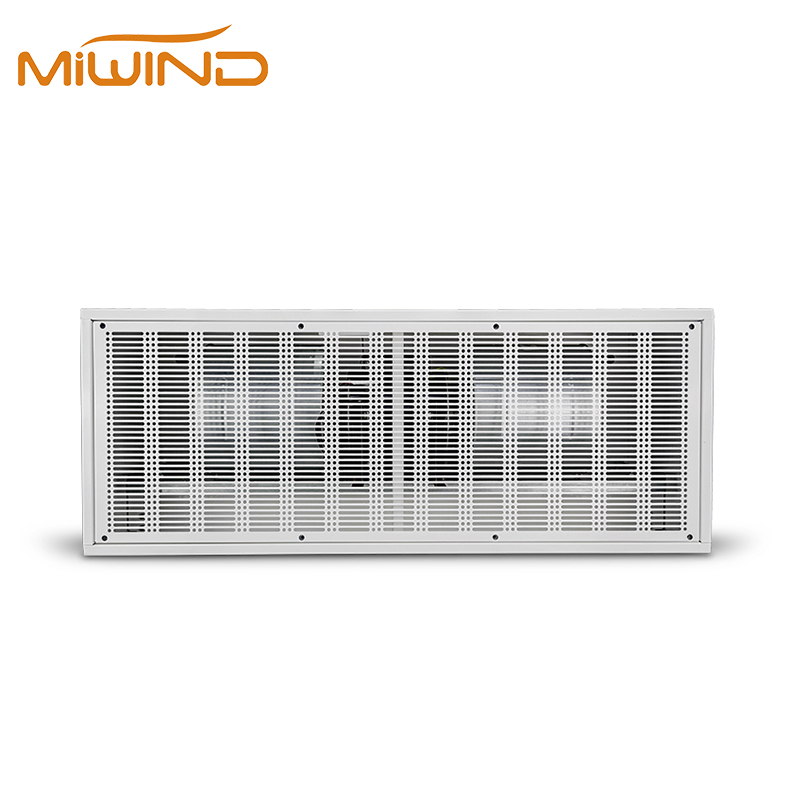
The limit is that an air curtain is still affected by the site. Strong wind can bend the air stream. Negative pressure can pull air inward. A door that stays open all day will create a heavier load than a door used in short cycles. A tall opening may require a different product review than a small service door. For taller or more exposed doors, the centrifugal air curtain category may need engineering review, but it should not be treated as a default answer without dimensions and photos.
Comparison Matrix: Visibility, Wear, Cleaning, Cost, and Airflow
Use this matrix to frame the conversation before sending an inquiry.
| Decision factor | PVC strip curtain | Air curtain | What to ask before choosing |
|---|---|---|---|
| Forklift visibility | Can become harder when strips are scratched, dirty, or moving. | Opening remains visually open. | Are drivers reporting blocked sight lines or near misses? |
| Traffic speed | Drivers physically push through the strips. | Forklifts pass through the air stream. | Is traffic continuous, seasonal, or occasional? |
| Cleaning workload | Strips can collect dust, grease, moisture, and handling marks. | No hanging strips in the traffic path. | Are hygiene or housekeeping complaints tied to the strips? |
| Wear and replacement | Strips may need periodic replacement. | Main maintenance shifts to unit cleaning, inspection, controls, and electrical review. | How often are strips replaced and what does downtime cost? |
| Air separation | Creates a partial physical barrier when in place. | Creates active airflow across the opening. | Is the main issue temperature, insects, dust, or comfort? |
| Door pressure | Can be pushed open or displaced by traffic and air movement. | Can be pulled off target by pressure or wind. | Does air rush through the doorway when other fans or doors run? |
| Installation constraints | Needs hanger space and clear traffic allowance. | Needs correct mounting clearance, power, and discharge path. | Are there rails, sprinklers, sensors, beams, or door hardware above the opening? |
| Best fit | Moderate traffic, simple separation, lower equipment complexity. | Frequent traffic, visibility concerns, active loading, open access. | Which problem costs more: air exchange or workflow friction? |
The strongest inquiries do not ask MIWIND to "replace strips" in the abstract. They describe what the strips are failing to do. A useful message might say: "Door 4 has heavy forklift traffic, cloudy PVC strips, insects in summer, and cold drafts in winter. We want to review whether an air curtain should become the active barrier."
When Both Layers Still Make Sense
Some facilities may still use both layers. For example, a warehouse might keep strip curtains at a low-traffic internal opening but review air curtains for a busy shipping door. A cold-chain site might use doors, seals, dehumidification, strip barriers, and air curtains in different zones.
The correct design depends on controlled variables:
- If the main issue is trailer perimeter leakage, review dock seals or shelters.
- If the main issue is long open time, review door discipline and high-speed doors.
- If the main issue is open access with air movement, review an air curtain.
- If the main issue is damaged or dirty strips, compare maintenance burden and access.
- If the main issue is pressure, review ventilation balance before selecting any doorway barrier.
Use the MIWIND Warehouse Industrial Door Project as a warehouse airflow management reference. The final choice still depends on the buyer's door size, traffic, wind, pressure, and operating goals.
MIWIND Inquiry Checklist
Before asking for a recommendation, collect a doorway package. The more specific the data, the less likely the project will be pushed into a generic answer.
| RFQ field | What MIWIND needs |
|---|---|
| Door size | Clear opening width and height, plus mounting height above finished floor. |
| Door type | Roll-up, sectional, sliding, high-speed, service door, or open passage. |
| Forklift traffic | Frequency, peak hours, direction, pallet height, and mixed pedestrian movement. |
| Existing strips | Age, condition, replacement frequency, cleaning burden, and photos. |
| Main problem | Visibility, temperature movement, insects, dust, odor, comfort, or maintenance. |
| Door behavior | Held open, automatic closing, door switch available, or continuous opening. |
| Pressure symptoms | Air rushing inward, doors hard to close, exhaust fans, opposite doors, or roof fans. |
| Mounting area | Header clearance, rails, beams, lights, sprinklers, sensors, and wiring route. |
| Electrical | Voltage, phase, heating preference if relevant, and control expectations. |
| Photos/video | Front view, side view, close-up of header, exterior yard, traffic path, and strip condition. |
Send the doorway measurements and traffic notes through Contact Us. Describe the condition of the existing strips, the operating problem and the required result so the comparison addresses your warehouse door.
FAQ
Are air curtains better than PVC strip curtains for forklift doors?
They can be a better fit when forklift traffic is frequent, visibility is important, strips are wearing out, or a physical barrier slows the workflow. Strip curtains may still be acceptable at simpler or lower-traffic openings.
Can air curtains substitute for strip curtains in every warehouse?
They should not be treated as an automatic substitute in every building. The decision depends on door size, mounting height, wind, pressure, traffic, hygiene expectations, temperature goals, and the condition of existing strips.
When should a warehouse use both air curtains and strip curtains?
A facility may use both when different openings have different needs. For example, a busy exterior dock may justify an air curtain, while a lower-traffic internal zone may keep PVC strips. Cold-chain and food-storage areas may need additional door, seal, sanitation, and humidity controls.
What information does MIWIND need before recommending a doorway setup?
MIWIND needs door dimensions, traffic frequency, existing strip condition, target problem, mounting clearance, power, controls, pressure symptoms, and photos or video. For tall roll-up doors, also review Industrial Air Curtain Sizing for Roll-Up Doors.
Next Step
Use Contact Us to send your door schedule, forklift traffic notes, PVC strip photos, and primary control goal. MIWIND can review the Air Curtain Series and the Industrial Series solution as part of a practical warehouse doorway comparison.