Exhaust Fan CFM vs Static Pressure: Understanding Installed Airflow
Understand exhaust fan airflow at pressure by comparing fan curves, duct losses, fittings, inlet and outlet conditions, replacement air and the installed duty point.
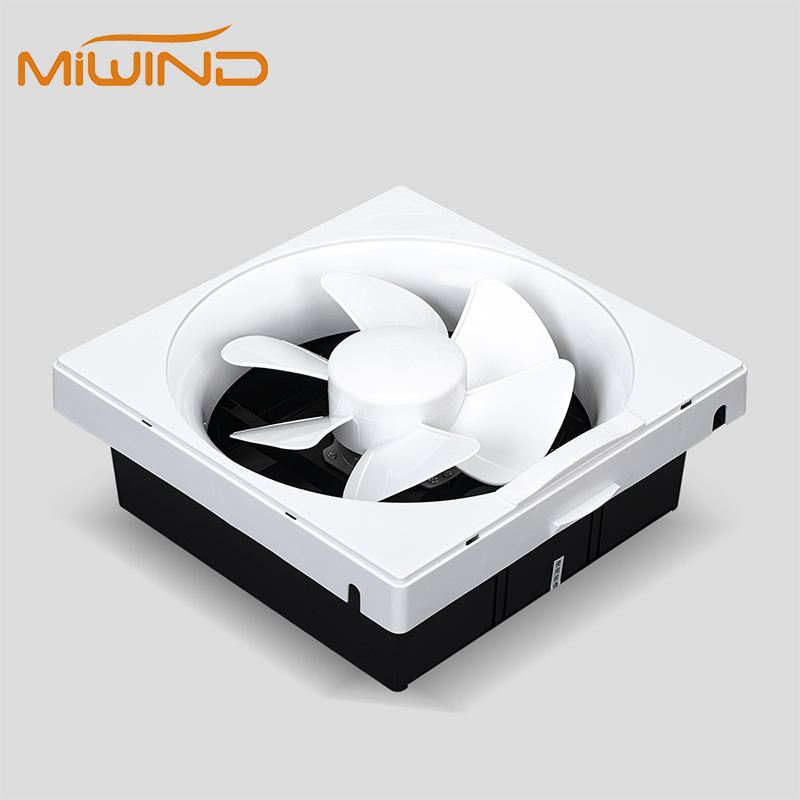
Compare an exhaust fan's airflow at the required pressure before using its catalog CFM for selection. The installed duct route, fittings, accessories, replacement-air path and conditions at the fan inlet and outlet determine the operating point.
For an exhaust fan inquiry, send the target airflow, system pressure estimate, duct drawing, fan position and discharge arrangement. Compare the Exhaust Fan Series and available formats, then request the matching technical documents.
Use this guide as a buyer checklist before fan selection or engineering review. Fan curves, installed CFM, static-pressure performance, pressure-loss tables, noise values, wattage, RPM, grease-duty certification, hazardous-exhaust suitability, exposure-control claims, and code compliance should be confirmed from the exact model and project documents.
CFM and Static Pressure Basics
CFM means cubic feet per minute, a volume-flow rate. Fan static pressure and fan total pressure are different rating quantities; total pressure also accounts for velocity pressure. Match the fan curve to the pressure basis used in the system calculation. For a given system, the operating point is where the fan capability and required system pressure intersect.
Greenheck's static pressure resource frames static pressure as a system-resistance question, not just a fan label. Panasonic's static pressure explainer is also useful for buyers who need a plain-language reason why duct resistance affects performance.
Free-air and nameplate CFM
A free-air or maximum airflow number is often measured with little or no connected duct resistance. It can be useful for category comparison, but it does not tell the buyer what the fan will move after installation.
That is why an exhaust fan CFM static pressure review should ask: at what pressure was the airflow stated? If the answer is unclear, the buyer may be comparing a free-air rating from one supplier with a ducted operating point from another.
Installed duty point
The installed duty point is where the fan performance and the system resistance meet. If the duct system creates more resistance, the duty point can shift to lower airflow. If the fan is selected for the wrong pressure condition, the installed result may disappoint even when the fan itself is not defective.
For curve interpretation, see how to read a fan curve and static pressure for duct fan selection. Apply the same rating-basis checks to the proposed exhaust fan.
What Adds Static Pressure
Static pressure comes from the full installed path. The fan sees the inlet, the outlet, the duct, and the accessories between them.
Duct length, elbows, and reducers
Longer duct runs, sharp elbows, undersized ducts, crushed flexible sections, abrupt reducers, offset transitions, and poor outlet paths can all add resistance. The issue is not just total length. A short route with multiple tight turns can be worse than a cleaner route with more length.
The Broan-NuTone duct length tool is a useful third-party reminder that duct fittings change effective duct length. Do not copy another manufacturer's calculator output into MIWIND performance claims. Use it as buyer education about why the duct layout must be described.
Dampers, grilles, filters, and louvers
Backdraft dampers, balancing dampers, louvers, filters, grilles, insect screens, hoods, rain caps, and discharge fittings may each add pressure loss. A fan selected only against bare duct can underperform after accessories are added.
Send accessory details when asking MIWIND for review. A simple note such as "two elbows and one wall cap" is better than only saying "short duct." Photos, sketches, and dimensions are better still.
How Fan Curves Connect CFM and Static Pressure
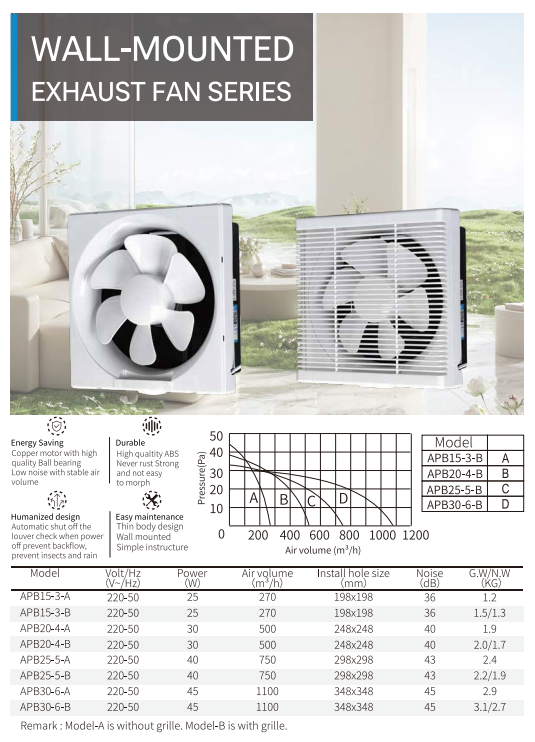
A fan curve shows how airflow changes as static pressure changes. AMCA's fan curve article is useful because it treats the curve as a way to understand operation, not as a single point.
For procurement, the practical question is not "What is the biggest CFM number?" It is "What airflow is expected at the project pressure?" A supplier may need the duct route, estimated pressure, target airflow, fan format, and discharge condition before the product comparison is meaningful.
MIWIND can discuss exhaust fan products after those inputs are clear. Without them, the conversation can only stay at product-family level.
System Effects That Can Change the Operating Point
Greenheck's system effects article is useful for this topic because it explains that installation geometry near the fan can affect performance. Inlet elbows, outlet restrictions, poor transitions, blocked inlets, tight wall openings, or close obstructions can change how the fan actually operates.
For the complete hood-to-discharge arrangement, review source-capture ventilation. A fan curve addresses equipment performance; it does not establish capture at the source or safe discharge by itself.
If a fan is already installed and airflow is weak, use the post-install guide on low airflow troubleshooting. If the route is specifically a long inline duct run, the long duct run fan sizing workflow is the better next article.
Buyer Checklist for MIWIND Review
Before asking for exhaust fan support, collect:
- Application type: kitchen, workshop, bathroom, equipment room, production area, public space, or another room.
- Exhaust source and room use.
- Target airflow if provided by an engineer or project document.
- Existing fan model, current fan format, nameplate CFM, and operating complaint if this is a retrofit.
- Estimated static pressure, duty point, or fan curve requirement if known.
- Duct diameter or section size, length, route, and material.
- Elbows, reducers, dampers, grilles, filters, louvers, wall caps, roof caps, rain hoods, and backdraft dampers.
- Fan location, inlet condition, outlet condition, and service access.
- Make-up air path or pressure symptoms if they are part of the complaint.
- Photos, drawings, country or market, document needs, quantity, and timeline.
This list helps MIWIND separate product matching from missing engineering inputs. It also keeps the exhaust fan CFM static pressure discussion from becoming a guess about a duct system nobody has described.
Related Exhaust Fan Options
Use MIWIND exhaust fan series for installed-duty review after the project has basic airflow and route information. Use the broader exhaust fan application path when the buyer is still comparing wall-mounted, roof, ceiling, integrated, ducted, or application-specific exhaust formats.
For placement details, read fan placement and straight-duct rules. Placement rules do not replace a curve or pressure review, but they help avoid avoidable inlet and outlet problems.
FAQ
Does nameplate CFM equal installed airflow?
No. Nameplate or free-air CFM may not include the actual duct, accessories, pressure, and installation effects. Installed airflow depends on the fan and the system together.
Can a bigger fan automatically fix low airflow?
Not necessarily. A bigger fan may still perform poorly if the duct is restrictive, blocked, leaking, undersized, or affected by poor inlet or outlet geometry. The system should be checked before assuming the fan size is the only issue.
Can MIWIND confirm exact CFM at static pressure from this article?
No. This article provides an input checklist. Model-level fan curves, duty-point data, and performance claims require current product documents and project review.
Next Step: Compare Airflow and Application
Use send duct layout for review after collecting the application, target airflow if engineer-provided, duct route, fittings, accessories, current fan data, static-pressure or duty-point requirement if available, make-up air context, photos, drawings, quantity, market, and timeline.