Industrial Dehumidifier Sizing: Moisture-Load Inputs
Build a dehumidifier sizing brief from moisture sources, air exchange, room conditions, operating hours and the required RH target.
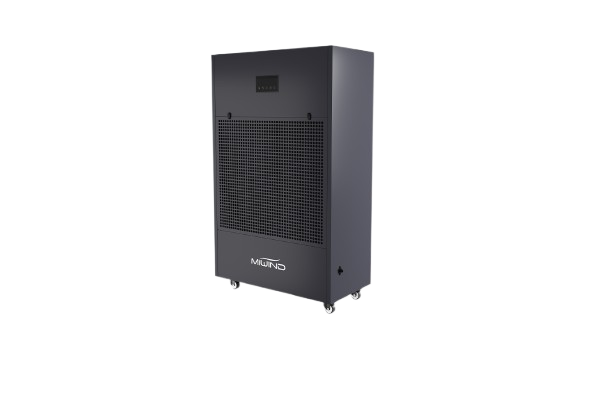
Industrial dehumidifier sizing starts with moisture load, not only with floor area. A warehouse or factory can have the same square footage as another site but a completely different humidity problem because of door traffic, outdoor air, wet materials, washdown, process water, temperature, ventilation, and the target relative humidity.
This guide is for facility engineers, warehouse managers, factory maintenance teams, EHS teams, distributors, and OEM buyers preparing a humidity-control RFQ. MIWIND can discuss industrial dehumidifier series, the industrial dehumidifier category, broader solutions, and project inputs through Contact Us.
This guide does not replace project review or final selection. Exact capacity, technology choice, energy impact, and performance expectations depend on site data, operating schedule, and product configuration.
Why Sizing Starts With Moisture Load
Moisture load is the real problem
The useful question is not "How many square meters can one unit cover?" The better question is "How much moisture enters or appears in the space during the hours when RH must be controlled?" That moisture can come from infiltration, ventilation, wet goods, people, cleaning, production processes, open water, packaging, loading doors, or warm humid air contacting cooler surfaces.
Estimate the moisture sources, outdoor-air or infiltration load, process activity, operating schedule, and required room conditions before comparing equipment. A qualified designer may need a project-specific load calculation; this article provides the information checklist, not a capacity formula.
The target condition defines the equipment question
A facility that wants to lower RH from 80 percent to 60 percent has a different task than one trying to maintain a tighter target during continuous production. Temperature also matters because warmer air can hold more moisture. A dehumidifier rating at one condition may not represent performance at a cooler warehouse, a hot workshop, or a partially ventilated storage area.
Use industrial humidity control RH target before finalizing a capacity brief. The RH target should come from material risk, process risk, comfort, storage stability, corrosion concern, or condensation control, not from a generic rule.
Key Inputs for a Dehumidifier Sizing Brief
Room volume and temperature
Start with length, width, height, current temperature range, desired temperature range if relevant, and whether the space is open to adjacent rooms. Volume matters because a tall warehouse contains more air than a low storage room with the same floor area.
If the space has mezzanines, open loading bays, partial partitions, or connected rooms, describe those conditions. A clean drawing or photo set can prevent a supplier from treating a complex facility as a simple box.
Starting RH, target RH, and operating hours
Record the current RH range, the desired RH range, and when control matters. Is the goal 24-hour storage protection, shift-time comfort, overnight drying, seasonal protection, or recovery after washdown? The operating schedule changes how aggressive the moisture-removal plan must be.
If the buyer only has one RH reading, collect more data before selection. A single midday reading may miss night peaks, rainy-season conditions, door-open periods, or production events.
Door traffic, infiltration, and fresh air
Loading doors, personnel doors, dock traffic, exhaust systems, make-up air, and outdoor air ventilation can all add moisture. Fresh air may be needed for IAQ or process reasons, but it becomes part of the latent load when outdoor air is humid.
Describe door width, door open time, forklift traffic, fan operation, exhaust operation, and whether the building tends to run negative. If air is pulled through gaps or doors, the dehumidifier may be asked to handle a moving target.
Process water, wet goods, and people
Moisture can also come from inside the facility. Wet cartons, washed floors, curing products, open tanks, cooling processes, food production, people, compressed-air discharge, or drying operations may add load even when doors are closed.
List each moisture source and when it occurs. "Daily floor washdown at 6 pm" is more useful than "high humidity." "Wet goods enter after production and sit overnight" is more useful than "storage room feels damp."
Why Square-Foot Rules Can Mislead Industrial Buyers
Square-foot charts may help frame an early discussion, but they are not a final industrial capacity method. Document moisture sources, air exchange, RH and temperature targets, operating hours, airflow paths, and drainage before requesting a project review.
Two factories with identical areas can need different solutions:
| Facility condition | Why the load changes |
|---|---|
| Frequent dock openings | Humid outdoor air can enter repeatedly. |
| Wet materials or washdown | Moisture is generated inside the space. |
| Cooler surfaces | Condensation risk rises before average RH looks extreme. |
| High exhaust volume | Replacement air can bring latent load. |
| Tight storage target | More precise control may require different capacity planning. |
That is why industrial dehumidifier sizing should be treated as a project brief. The supplier needs enough data to understand the humidity load, not just enough data to quote a cabinet size.
RFQ Checklist for MIWIND Review
Send MIWIND:
- Room length, width, height, and layout notes.
- Current RH range, target RH range, and temperature range.
- Operating schedule, seasonal peak periods, and control priority.
- Door count, door size, open time, and forklift or personnel traffic.
- Ventilation, fresh-air, exhaust, and pressure symptoms.
- Moisture sources such as wet goods, process water, washdown, people, or open tanks.
- Drainage path, power supply, installation constraints, and service access.
- Photos, drawings, monitoring records, and any symptoms such as mold, corrosion, condensation, odor, or product damage.
Ask MIWIND which product path, document pack, and follow-up questions are needed before a recommendation. For capacity language, use dehumidifier capacity ratings explained so the team compares rated conditions rather than nameplate numbers alone.
If data is missing, mark it as pending. It is better to say "door-open time unknown" than to hide the uncertainty inside a guessed selection. A good sizing discussion makes uncertainty visible before the buyer commits to a model.
FAQ
What is industrial dehumidifier sizing?
It is the process of estimating the moisture-removal requirement for an industrial space based on room volume, RH target, temperature, moisture sources, infiltration, ventilation, operating hours, and site constraints.
Can buyers size by square footage only?
Square footage can start the conversation, but it is not enough for warehouses and factories. Moisture load, door traffic, fresh air, process water, and target RH often matter more.
Does this article provide an exact MIWIND capacity calculation?
No. Exact capacity selection requires project data, product documentation, and MIWIND review. This article lists the inputs buyers should prepare.
What should buyers send before requesting a quote?
Send room dimensions, current and target RH, temperature, door traffic, fresh air, moisture sources, drainage needs, photos, and any monitoring records.
Next Step: Send Room Size and RH Target
Use send room size and RH target with the checklist. A clear industrial dehumidifier sizing brief helps MIWIND review humidity-control options without relying on a misleading square-foot estimate.