Industrial Relative Humidity Targets: Set RH by Risk
Set an industrial RH target from material, process and condensation risks, then verify it with temperature and trend data.
An industrial humidity control RH target should come from the facility risk, not from a universal number. Mold prevention, corrosion control, packaging stability, comfort, condensation reduction, and process accuracy can all point to different humidity goals.
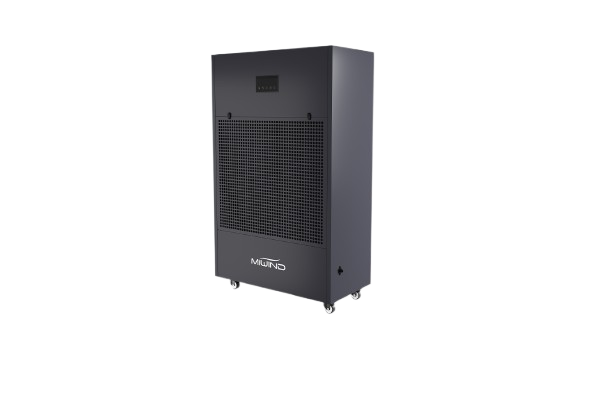
This guide is for factory managers, QA and EHS teams, warehouse operators, engineers, and distributors helping customers define requirements before equipment selection. MIWIND can discuss the industrial dehumidifier category, industrial dehumidifier series, broader solutions, and RH review questions through Contact Us.
This guide does not prescribe one RH target for every facility. The right setpoint depends on the material, process, storage condition, and building behavior in each project.
Why There Is No Universal Industrial RH Target
RH is a risk-management setting
Relative humidity compares the moisture in air with the amount the air can hold at its current temperature. Because temperature changes that capacity, record RH and temperature together when evaluating a facility or comparing readings from different zones.
A universal target is risky because each site is protecting something different. A warehouse storing paper cartons may care about mold and label damage. A metal-parts store may care about corrosion. A food packaging room may care about clumping and film behavior. A production room may care about process repeatability.
The target should be practical
The industrial humidity control RH target also has to be achievable. A leaky loading area with heavy door traffic may need sealing, door control, HVAC review, and dehumidification before it can hold a tighter range. A target that looks good on paper but cannot be maintained during rainy-season operations will frustrate both the facility and the supplier.
Common RH Goals by Risk Type
Mold and condensation risk
EPA's mold course chapter on moisture control and mold basics page are useful because they emphasize moisture control, wet materials, and the importance of keeping humidity in check. For industrial buyers, the lesson is not that one product solves mold; the lesson is that moisture sources, leaks, condensation, drying time, and RH all need attention.
For mold risk, address water intrusion, wet materials, condensation, and drying time as well as room RH. The EPA moisture-control guidance explains why moisture sources and damp materials need attention; a dehumidifier alone does not resolve them.
Corrosion and metal storage
Metals are sensitive to moisture, surface temperature, contaminants, and exposure time. A metal-parts storage room may need an RH target based on material, surface finish, packaging, salt exposure, handling, and storage duration. Do not copy a preservation target from another industry without checking the material and process.
If corrosion is already visible, collect photos, affected material, storage time, packaging condition, temperature/RH logs, and whether condensation appears on parts or racks. The dehumidifier discussion should be tied to those facts.
Packaging, raw materials, and finished goods
Cartons, labels, powders, films, paper, textiles, wood, and some chemicals can react badly to high humidity. They may warp, clump, stick, soften, smell musty, or lose dimensional stability. The target should protect the material without creating other problems such as excessive dryness, static concerns, or process changes.
Munters' self-storage and warehouse page and preservation page are useful references because they frame humidity control around stored materials, archives, preservation, and long-term condition control.
Comfort and process stability
Some facilities need humidity control for people and operations, not only stored goods. High RH can make a workshop feel uncomfortable even when temperature is acceptable. Low or unstable RH can affect some processes, coatings, adhesives, electronics handling, or measurement work.
The RH target should name the purpose. "Comfort for assembly staff" is different from "prevent condensation on chilled equipment" and different again from "protect cartons during rainy-season storage."
How Monitoring Changes the Target
One reading is not enough
Before selecting equipment, collect RH and temperature data over time. A single reading may miss early-morning peaks, rainy days, door-open periods, washdown recovery, or process cycles. Put sensors near likely problem areas and also in representative storage zones.
Monitoring should answer:
- What is the current RH range?
- When does RH peak?
- Which zones are worst?
- Does condensation happen at specific surfaces?
- Is the problem seasonal, daily, or process-driven?
- Do doors, exhaust fans, fresh air, or wet materials change the pattern?
Set the target by zone
One facility may need more than one target. A general warehouse, cold surface area, packaging room, metal store, and process zone may not share the same risk. Zone-specific targets keep the project realistic and reduce the temptation to oversize or misapply equipment.
Use monitoring notes when asking for industrial dehumidifier sizing. The sizing conversation is stronger after the RH target and problem zones are clear.
How RH Targets Affect Dehumidifier Selection
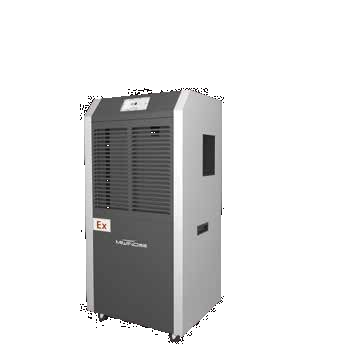
A dehumidifier is selected after the target is defined. The target affects capacity, operating hours, drainage, controls, airflow placement, and whether the project needs refrigerant, desiccant, HVAC, sealing, or ventilation review.
Use dehumidifier capacity ratings explained before comparing catalogue numbers. A model's stated capacity must be read with its rating condition and operating environment.
If the target is aggressive, ask whether the building envelope, door behavior, fresh-air volume, and moisture sources support that goal. Equipment alone cannot overcome an uncontrolled moisture source forever.
RFQ Checklist for RH Control Projects
Send MIWIND:
- Material or product stored, handled, or processed.
- Current RH range and desired RH range.
- Temperature range and operating schedule.
- Mold, condensation, corrosion, clumping, odor, comfort, or process symptoms.
- Monitoring method, sensor locations, and recent trend data.
- Door traffic, ventilation, exhaust, fresh air, and pressure symptoms.
- Room dimensions, layout, drainage, power, installation constraints, and photos.
- Any buyer-side quality, storage, or process requirements.
Ask which information is still missing. If the material requirement is unknown, mark it as an open question. If monitoring data is weak, collect more. A practical industrial humidity control RH target is easier to defend when the team can show why the target exists.
FAQ
What RH should an industrial facility maintain?
There is no universal target. The correct RH range depends on mold risk, corrosion risk, stored material, comfort, process sensitivity, temperature, building condition, and monitoring data.
Is lower RH always better?
No. Too low a target may be unnecessary, expensive, or harmful for some materials and processes. The target should match the risk being controlled.
Can MIWIND define the RH target for every facility?
No. MIWIND can review humidity-control inputs, but the buyer must define material, process, storage, quality, or comfort requirements for the specific facility.
Should RH be measured before selecting a dehumidifier?
Yes. Trend data helps identify peaks, zones, seasons, and moisture sources. It also helps avoid selecting equipment from one unrepresentative reading.
Next Step: Review RH Target
Use review RH target with current RH, desired RH, temperature, stored materials, symptoms, monitoring method, and photos. A clear industrial humidity control RH target makes the dehumidifier selection discussion more accurate and less dependent on guesswork.